SOCIAL ANGST is more than just a blog, it is an invitation to aid in the building of wealth through the shared task of information distribution and discussion. It is a call to engage – engage in society, engage with your peers, engage in your political system, engage in spreading the wealth that is information, and engage in multiplying that wealth through discussion – so that collectively we may become more socially aware, more socially responsible, more socially vocal and ultimately more socially valuable.

Thursday, July 31, 2008

"We're Sorry" - The American Medical Association Offers Apologies for Past Racism in the Form of Exclusion

Heathcliff Huxtible would be proud.

A practice of institutionalize racism within their organization was acknowledged this month by leaders of the American Medical Association, a practice that potentially created a health care deficiency in many Black communities. In a press release dated July 10th, the AMA makes this statement:

The American Medical Association (AMA) today apologizes for its past history of racial inequality toward African-American physicians, and shares its
current efforts to increase the ranks of minority physicians and their participation in the AMA.

(Read the entire press release here)

The statement comes in response to an ongoing study that began in 2005 by an independent pannel of experts specifically studying racial disparities in organized medicine. The findings of the study are available here on the AMA Website. In a proactive attempt to bridge the gap of racial disparity, the AMA formed the Minority Affairs Consortium (MAC), a philantropic organization aimed at funding through scholarships initiatives that tackle the problem of racial disparities in medicine. In 2008, 12 medical students were awared scholarships in the amount of $10,000 to fund such projects.
For more information please visit the AMA website.

Sources and more information:

Social Angst Commentary:

The first step to recovery is admitting there is a problem.
Thoughtfully appreciate the apology and impress upon the medical students in your life to utilize the opportunity.


Peace and Blessings...
read more...

Wednesday, July 30, 2008

United States Army Apologizes to Wrongly Accused Black Soldiers of WWII

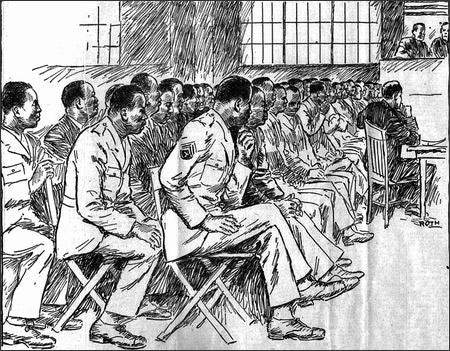
In Seattle today, 28 Black WWII soldiers were given back the honor that was stolen from them 64 years ago. Along with an official apology, the United States also reinstated the 28 soldiers to the status of honorably discharged.

On August 14, 1944, a riot between (segregated) Black and White soldiers left an Italian POW, Guglielmo Olivotto, dead. In the largest court martial hearing of WWII, 43 Black soldiers were charged with inciting the riot that killed Olivotto. Of the 43 charged, 28 were found guilty and subsequently released from their duties with a dishonorable discharge and sentenced up to 25 years in prison.

Today, the Army admitted that there was conclusive evidence of negligence in the official court martial procedure, including gross misconduct by the prosecutor who has been accused of withholding evidence. The Army overturned the previous convictions and offered a bittersweet apology to the soldiers and their families. Of the 28 convicted, only 2 are still alive, and sadly Samuel Snow passed away shortly after his son read him the official apology.

Sources and more information:
http://www.komonews.com/news/local/25947129.html

http://www.enews20.com/news_Veteran_from_WWII_Dies_after_Army_Apologies_09883.html


http://seattletimes.nwsource.com/html/editorialsopinion/2008051394_soldiered15.html


SOCIAL ANGST HASSLE FREE ACTIVISM
  • Be a mouth piece - small talk this story into the consciousness of the people around you.
  • Research the impact that Black Americans had on WWII
  • Segue and promote Spike Lee's new Joint - Miracle at St. Anna.


Peace and Blessings...
read more...

Tuesday, July 29, 2008

How To Address A Racially Insensitive Comment

Racially insensitive comments are like farts - they happen, they linger, they stink, and they are hard to talk about. A friend of mine sent me the following video clip. In it, a man details an effective way to handle racially insensitive comments. I think his strategy deserves recognition:


Now you may wonder, why go through all this trouble instead of just calling a racist a racist, cursing him out, and keeping it moving? Well for starters, handling it in that manner doesn't foster any understanding. Many times racially insensitive comments are made because the person doesn't recognize the insensitivity. If I immediately call that person a racist, communication, and subsequently an opportunity to teach, has been lost.

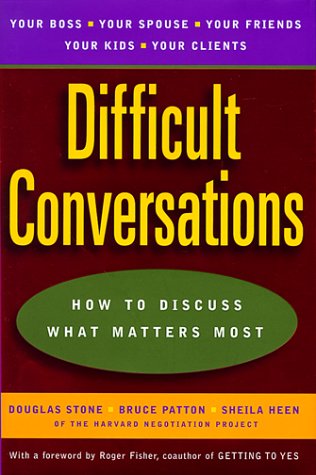
Earlier this month I went to a discussion group on this book:

The book gives you a variety of tools for handling stressful conversations. In the book the author stresses the importance of separating the instance/action from the individual (get the ebook at the Ebooks For Your Life Blog). It is the difference between addressing a statement as being racially insensitive and making a blanket assumption that because a person made a racially insensitive comment, he must be a racist. This assumption is illogical for a variety of reasons - most importantly because to be a racist, a person must exhibit a pattern of racially insensitive behavior. If you are dealing with one statement, and have no further knowledge of a pattern of behavior, then you cannot logically argue that the person making the statement is a racist.

A better way of handling the situation, as outlined in the video is to address the statement. For example, "sir, are you aware that your statement comes across as offensive?" Asking instead of presuming will go along way to keep the lines of communication open - which is your ultimate goal. You want to inquire as to he felt no problem with making the statement. You want to communicate how the statement could be misconstrued as offensive. You want to turn the situation into something potentially positive.

What you don't want to do is not hold a person accountable for their statement. When you question the identity instead of the action, you allow a line of defense to be introduced regarding all the ways that said person is not a racist, instead of addressing the actual statement. For example, if someone makes a comment about blacks eating chicken - and I call him a racist - his immediate defense will likely be to outline all the ways in which he is NOT a racist - his volunteer work in Black communities, his Black friends, his commitment to jerk pork. If I instead question the comment - his defense is limited to the statement itself and/or his thoughts/experiences that helped formed the the statement. At the end of the day, this is the conversation that you want to have. This is the discussion that fosters an understanding to the nuances of racism.

Besides, addressing racially insensitive comments in this manner might just make you a superhero. Remember, racism kills:


having the conversation now just might save someone from getting their ass beat next time...

Peace and Blessings...
read more...

Monday, July 28, 2008

Small Talk: Stuff you should be talking about - Miracle at St. Anna

Director Spike Lee and author James McBride collaborate to release "Miracle At St. Anna," the visual interpretation of McBride's novel of the same name. The film, which is set to be released this upcoming September, tells the story of four 92nd Infantry Buffalo Soldiers who find themselves trapped in a small Tuscan village during World War II. Learn more about the story by visiting the Miracle at St. Anna pages on Wikipedia.com and IMDB.


I must admit that I am looking forward to seeing this one. The cast, in a word, is beautiful. Spikes has continually set a precedent for casting talented actors flying just below "Big Hollywood's" radar and this project is no exception. If you are a fan of Black film you will be treated to some of your favorites - Derek Luke, Michael Early, and Kerri Washington among them. Check out the trailer below!


SOCIAL ANGST HASSLE FREE ACTIVISM
  • You know how I feel about supporting positive Black Programming so I'm starting my motivation tactics now. I want you to go out and see this movie and support Black directors, authors and actors with just one movie ticket. In fact, I would really like to advocate some ADVANCE PURCHASING of these tickets. Always remember, let your dollar make a statement.
  • Go out and purchase the book and support Black Authors. Read up and become familiar with the story before the movie comes out. Purchase two copies and read it with a young person in your life.
  • You know the tenants of the Social Angst Blogs - Engage. Inform. Discuss. Spread the word.


read more...

Sunday, July 27, 2008

Will Smith - Top Paid Actor


Will Smith makes me smile for an ever-growing plethora of reasons. He is a commanding role model who has accepted the responsibility without whining about it. He carries himself as a man - a loving husband to his wife, an adoring father to his children, a committed and passionate employee of his industry - and he does all of this while making it look as if it was the most natural thing on earth to do. Oh, and last but certainly not least, this man is a walking, talking, living, breathing illustration of a FINE, DISTINGUISHED, GENTLEMAN. Hallelujah.


On July 24th, 2008, reported that Forbes.comnamed Will Smith the top earning actor in Hollywood this past year. From Forbes:

Will Smith

$80 million

A star who turns out blockbuster after blockbuster, Smith pulled in a gross of $585 million with his thriller I Am Legend, more than half of it overseas. When he takes a rare risk, as in his drama The Pursuit of Happyness, his films still make bank. He's keeping this summer warm with his anti-superhero flick Hancock.


Eddie Murphy and Oprah Winfrey were also cited in the Newsday.com article. Eddie rounded out the top five on the Forbes list with a showing of $55 million (tying for fifth with Mike Meyers) last year. Newsday also made a point to note that the Oprah is still the earner to beat - banking an amazing $275 million last year.

We here at Social Angst (well actually, it's still only me right now) applaud the accomplishments of these high achievers. These entertainers turned business moguls are working examples that success IS possible. Will, Eddie and Oprah are helping to change the perception of Black in America (I'm not even going to fight it, 'Black in America' has officially become a catch phrase).

Social Angst Hassle Free Activism:
  • Small talk - bring up these accomplishments in your casual conversation. Help balance the face of Black America by offering positive reinforcement of extraordinary Black progress.
  • Be active in reminding the young people in your life of these accomplishments.
  • Email the article to friends and family. Let's start spreading the wealth of good news in Black America at the same speed and urgency we spread the bad.
read more...

Social Angst Cosigns CNN's Black In America Special


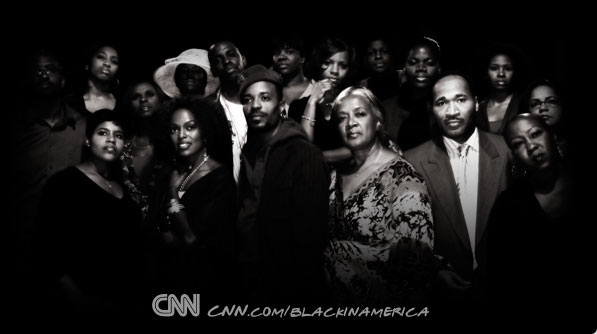
The title is brilliant: CNN Present’s (insert brief dramatic pause) Black In America; it sounds nothing short of epic. The subject matter, both compelling and controversial, is often times not discussed openly nor honestly in mixed company. In fact, discussions investigating what it means to be Black in America are noticeably vacant in mainstream media; unless, of course, it is commentary made in response to some grandiose racial faux pas (a la Imus, Michael Richards, or the Sean Bell officers). On the strength of that alone, Soledad O’Brien and CNN should be highly commended for depicting and analyzing the “Black experience” for seemingly no reason other than its own merit. Kudos (#1).

CNN billed the special as an in depth look at Black America and all that it encompasses. The documentary was divided into two segments, Black in America: Black Women & Families and Black in America: The Black Man. When asked during an interview the show was split up in such a manner, O’Brien downplayed its relevance, providing and easier to accept answer that because of the large amount of information being covered, the special had to be broken up and logically this division made most sense. (See the interview here: http://www.youtube.com/watch?v=kVRGcUlYEGc) Smart answer; although I would bet there is more to it. After viewing the two specials in their entirety, it was clear that the Black family, in the most traditional sense of the term, is slowly becoming extinct. In fact, both specials covered the lack of Black men in Black society. During the “Black Women & Families” special, we were introduced to a number of successful professional Black women (Karema Powers and Kriss Turner ) who are having issues finding eligible Black males and in “The Black Man” special we are introduced to a young man who remains absent from his daughters life. Each special discusses reasons for the absentee behavior including the disproportionate amount of Black men who are incarcerated, the cycle of fatherless sons who are without the tools to take on the responsibility of raising the children that they have (irresponsibly) fathered, and the unbalanced ratio of college educated Black women to college educated Black men. For truth and an ability to discuss the issue without bias, Black In America earns kudos (#2).

Bias is something that Black Americans think of critically; specifically the biased representation Black images in mainstream media. Blacks are routinely subject to fallacy in advertisement and the Black In America special seemed to take that into consideration with every story it presented. While generally the media makes it easy for America as a whole to believe that Black men are, by design, ill-equipped to be responsible parents, the Black In America specials are careful to highlight the often unseen but prevalent population of Black men who are committed to taking care of their families. The stories of Anthony and Lavon Smith, Roland Fryer, and D. L. Hughley show caring fathers who are dedicated to seeing their children succeed. Black In America are also include other positive, ambitious, and socially responsible black men in the documentary – giving both face and voice to the typical Black male (though often viewed as the token exception). For reaffirming that positive Black males live and breathe in our communities every day, Black In America earns kudos (#3).

The Black community needs to be saved – unfortunately, whether you would like to admit it or not, statistics do not lie. Large populations of Black people are failing in marriage, education, and employment. The question is no longer whether we need to be saved, but instead, who will save us and how? CNN does a good job of outlining how Black Americans are taking steps to save themselves. Throughout the special we are given access to several non profit organizations who are truly trying to make a difference in their communities. With initiatives like Marry Your Baby Daddy Day a project founded by Maryann Reid aimed at encouraging unwed Black parents to get married – socially conscious and creative people are finding solutions that work. For discussing how Black Americans are helping their people, kudos (#4) are awarded.

Overall, I was impressed with Soledad O’Brien and CNN for offering a great first look at a very complex issue. The specials explored the myriad of relevant issues that face Black Americans on a daily, sometimes momentary basis. The discussion was honest and the explanations (not excuses, in my opinion) were thoughtful and valid. The problems highlighted – failing education, failing health, misrepresentation in media, disproportionate incarceration rates, and the extinction of marriage and traditional family values - are definitely the five top issues facing Black America. The special discussed each issue sufficiently enough to warrant further discussion and brief enough to keep young viewers (the ones who benefit most from the documentary) interested. I also enjoyed the fact that special was reported in a way that invited critical thinking – even from people who are not Black. Anyone who watches this program will find that they are better equipped socially than those who have not. The show allows anyone - the young, the old, the Black, the White, the liberal, the conservative - to broaden their thoughts on not only to what problems exists, but why such problems exist and how begin to rectify these problems. For seeing the complete picture, including how non-Blacks benefit from the forward mobilization of Black people, kudos (#5) is awarded.

5 Kudos. That seems about accurate. I wouldn't go so far as epic, but it is definitely worthwhile.

Peace and Blessings…
read more...

Saturday, July 26, 2008

BLACK IN AMERICA: THE BLACK MAN (FULL VIDEO)

The third installment of CNN's special "Black In America: The Black Man" was aired originally aired on Thursday, July 24th 2008. Though I have yet to watched this segment, the feedback that I have gotten has been mostly positive. Let me know what you think.

**Special thanks to www.ShowHype.com for being the first online source I found to have the full complete video of the BIA:The Black Man special.

SOCIAL ANGST HASSLE FREE ACTIVISM:
  • If you haven't watched the special on CNN, please do. It will presumably be aired several more times on the network. It is important to celebrate good black programming - it proves that there is an interested audience and helps set precedent that will help similar documentaries get closer to production,
  • Spread the word. Think about the who you feel would benefit from watching the special. Are they CNN watchers? Have they been informed that these specials even exist? Point the people in your life who need to see the special in the right direction. Send emails announcing upcoming shows or send links to the Social Angst Blog so they can view the specials online.
  • Leave comments here at Social Angst and anywhere else around the Internet that the topic is being discussed. In your comment, remember to include the words "CNN," "Soledad O'Brien," and "Black In America". Prove that the topic is worth discussion.

BLACK IN AMERICA: THE BLACK MAN


more about "Video - Black In America "The Black M..." (posted with vodpod)
read more...

BLACK IN AMERICA: THE BLACK WOMAN & FAMILY (FULL VIDEO)

Aired on Wednesday, July 23, 2008, the second installment of CNN's highly publicized "Black In America" documentary, hosted by Soledad O'Brien explores the intricacies of Black women and Black families. The segments subjects are broad, yet when connected like a jigsawa puzzle, the collectively offer a respectable glimpse into the thoughts, struggles and concerns prevelant in the lives of Black Americans.

Undoubtedly the documentary will foster lots of conversation. In fact, at the very least the series should be applauded for it's ability to start the types of conversations that are typically only broached as the result of some gross racial faux pas (think Imus). Personally, I was fond of the subtle way in which proactive initiatives were highlighted. The stories of the dedicated Black men and women who are making personal and viable commitments to improve the communities surrounding them by founding and/or running local non-profit organizations/projects (specifically the woman that focuses on marrying unwed parents, the gentleman focusing on using financial motivators to improve education standards, and a doctor who focuses on helping victims of violent crimes get their lives together).

There is no lacking in opinion on the documentary; some finding it informative and epic, others finding it wanting. I will share my personal feelings on it in the next post, however, until then let me offer you the thought of Karen Hunter, a blogger on www.BlackInAmerica.com (not directly affiliated with CNN or the documentary). In her blog entitled "Who's Watching Black In America?" Ms. Hunter inquires thoughtfully on whether the documentary would succeed in reaching the population of struggling Black Americans it aims to motivate. I found her blog to be thoughtful, and her concerns to be valid. So in the Social Angst spirit of engaging, informing, and discussing our way into relevant social activism please spread the word about the documentary to anyone you feel could benefit from it and please post your own thoughts here. Remember philanthropy is possible when you spread the wealth of knowledge. Link and holla back!

Special thanks to www.hiphopmusic.com for being the first site with the video link. Thank you for spreading the wealth.

Peace and blessings...

BLACK IN AMERICA: THE BLACK WOMAN & FAMILY


Part 1


Part 2


Part 3


Part 4


Part 5


Part 6


Part 7


Part 8


Part 9


Part 10


Part 11


Part 12


read more...

Thursday, July 24, 2008

Blacks & Spending

To let the media tell it, keeping up with the Joneses, Combses, and Knowles/Carters is among the number one reason for the financial demise of African American families. With the help of cultural icons such as Bill Cosby, the Black community has been under attack for its perceived frivolous spending tendencies. According to Cosby and his supporters, Blacks, so heavily concerned with impressing their peers, are more likely than other demographics to overspend as a means to validate their success.

But is the self-inflicted stereotype fact, fiction, or somewhere in between? Find out for yourself. Find below an article written by author Ray Fishman (originally appearing on Slate.com, see link below) which gives some insight to conspicuous spending and its relation to race. You might be surprised at the findings

*Remember, this blog is about discussion...so leave a comment and let everyone know what you think!


Cos and Effect
Bill Cosby may be right about African-Americans spending a lot on expensive sneakers—but he's wrong about why.
By Ray Fisman
Posted Friday, Jan. 11, 2008, at 7:44 AM ET


A few years ago, Bill Cosby set off a firestorm with a speech excoriating his fellow African-Americans for, among other things, buying $500 sneakers instead of educational toys for their children. In a recent book, Come On People, he repeats his argument that black Americans spend too much money on designer clothes and fancy cars, and don't invest sufficiently in their futures.

Many in the black community have been critical of Cosby for blaming poor people rather than poor public policies. Others have defended Cosby's comments as an honest expression of uncomfortable truths. But notably absent from the Cosby affair have been the underlying economic facts. Do blacks actually spend more on consumerist indulgences than whites? And if so, what, exactly, makes black Americans more vulnerable to the allure of these luxury goods?

Economists Kerwin Charles, Erik Hurst, and Nikolai Roussanov have taken up this rather sensitive question in a recent unpublished study, "Conspicuous Consumption and Race." Using data from the Consumer Expenditure Survey for 1986-2002, they find that blacks and Hispanics indeed spend more than whites with comparable incomes on what the authors classify as "visible goods" (clothes, cars, and jewelry). A lot more, in fact—up to an additional 30 percent. The authors provide evidence, however, that this is not because of some inherent weakness on the part of blacks and Hispanics. The disparity, they suggest, is related to the way that all people—black, Hispanic, and white—strive for social status within their respective communities.

Every society has had its equivalent of the $150 Zoom LeBron IV basketball sneaker, and thanks to Thorstein Veblen, we have a pretty good idea why. As the Gilded Age economist famously put it, "conspicuous consumption of valuable goods is a means of reputability to the gentleman of leisure," and "failure to consume a mark of demerit." To consume is to flaunt our financial success; it's how we keep score in life.

Economists refer to items that we purchase in order to reveal our prosperity to others as wealth signals. But why use sneakers, as opposed to phonics toys, as a wealth signal? First off, for a signal to be effective, it needs to be easily observed by the people we're trying to impress. This includes not just those near and dear to us, but also the person we pass on the street, who sees our sneakers but would have a harder time inferring how much we're spending teaching our kids to read. For a wealth signal to be credible, it also needs to be hard to imitate—if everyone in your community can afford $150 sneakers, those Zoom Lebron IVs would lose their signal value.

In general, the poorest people in any group are forced to opt out of the conspicuous consumption arms race—if you can't afford the signal, even by stretching your finances, you can't play the game. I, a humble economics professor, don't try to compete in a wealth-signaling game with the Wall Street traders whom I see on the streets of Manhattan. But this still leaves us with the question of why a black person would spend so much more in trying to signal wealth than a white person. The Cosby explanation—that there is simply a culture of consumption among black Americans—doesn't quite cut it for economists. We prefer to account for differences in behavior by looking to see if there are differing incentives.

Why would otherwise-similar black and white households have different incentives to signal their wealth? Charles, Hurst, and Roussanov argue that it's because blacks and whites are seeking status in different communities. In the racially divided society we live in, whites are trying to impress other whites, and blacks are trying to impress other blacks. But because poor blacks are more likely to live among other poor blacks than poor whites are to live among other poor whites, poor black families are more susceptible to being pulled into a signaling game with their neighbors.

Consider, for example, a black family and a white family each earning $42,500 a year, the median income for a black household during the 1990s. This black family sees that other black families are buying cars, clothes, and other wealth signals that, while stretching this black family's financial resources thin, are technically affordable for a family making $42,500. So, this family decides to buy them, too, in order to keep up with the conspicuous consumers that they compare themselves with.

Now take the white family making $42,500. The average household income among whites in the 1990s was much higher—$66,800. This white family looks around the neighborhood and is more likely to see white families spending on luxuries that are simply beyond their financial reach. The white family making $42,500 is thus too poor to participate in a signaling game with its neighbors, so they don't. As a result, they're spared the cost of competing, just as I am spared the expense of trying to compete with the Wall Street traders I see driving around Manhattan in their Mercedes sedans.

To test their theory, the authors look at how much a white family spends on conspicuous consumption when it is surrounded by white families making a similar amount of money. They find that this white family spends the same portion of its income on visible goods as a black family surrounded by other black families with similar incomes. They also find that the further a family of either race slips behind the average income of nearby households of the same race (becoming too poor to compete in the signaling game), the less it spends on these visible goods.
Once these effects are accounted for, racial disparities in visible consumption disappear. It's not that black Americans are more inclined to signal wealth; rather, poor blacks are more likely than poor whites to be a part of communities where they are relatively rich enough to participate in the signaling game.

If signaling is just part of a deeper human impulse to seek status in our communities, what's wrong with that, anyway? If a household chooses to spend a lot on visible consumption because it gets happiness from achieving high standing among its neighbors, why should we care? To return to Cosby's concerns, if blacks are spending more on shoes and cars and jewelry, they must be spending less on something else. And that something else turns out to be mostly health and education. According to the study, black households spend more than 50 percent less on health care than whites of comparable incomes and 20 percent less on education. Unfortunately, these are exactly the investments that the black families need to make in order to close the black-white income gap.

In his controversial speech, Bill Cosby appealed to the African-American community to start investing in their futures. What's troubling about the message of this study is that Cosby and others may not be battling against a black culture of consumption, but a more deeply seated human pursuit of status. In this sense, Cosby's critics may be right—only when black incomes catch up to white incomes will the apparent black-white gap in spending on visible goods disappear.Ray Fisman is the Lambert Family Professor of Social Enterprise and research director of the Social Enterprise Program at the Columbia Business School. His book with Ted Miguel, Economic Gangsters, is forthcoming next year.

Article URL: http://www.slate.com/id/2181822/


read more...

Wednesday, July 23, 2008

Social Angst Calendar


read more...

Welcome to Social Angst

WELCOME.
There are no such things as coincidences, things happen because we want them to happen. You are here because either I wanted you here, you wanted to be here, or some combination of the two. Whichever reason really does not matter to me, I am just glad to make your acquaintance.

Welcome to Social Angst a blog that challenges you to engage, inform, and discuss your way into daily activism. Please take your time getting familiar with the blog and what I am trying to accomplish. Once you feel comfortable, if you are so inclined, I wholeheartedly invite you to participate – ENGAGE, INFORM, DISCUSS – actively. By my estimation having the information is the first step to making any real social progress.


ABOUT THIS BLOG.
In this day and age the most relevant and powerful form of currency worldwide is information. The heights of our accomplishments, both individually and communally, are directly manipulated by what information we have access to; and likewise, to function without information is to function with a disability

One of the biggest problems facing our society at large is disengagement. Large portions of our population are choosing to remain both uninformed and misinformed and the ramifications of such disengagement are widespread in the Black Community. To solve any problem, one must first have an accurate understanding of it. Yet it is impossible to understand that which we do not know. Knowledge (of information) is power and this blog is dedicated to the distribution of power through information.


MISSION.
SOCIAL ANGST is more than just a blog, it is an invitation to aid in the building of wealth through the shared task of information distribution and discussion. It is a call to engage – engage in society, engage with your peers, engage in your political system, engage in spreading the wealth that is information, and engage in multiplying that wealth through discussion – so that collectively we may become more socially aware, more socially responsible, more socially vocal and ultimately more socially valuable.


WHAT TO EXPECT.
For the most part, readers of this blog can expect to find links to news of social relevance, specifically that having an impact on the Black Community. Additionally, there will be my own personal thoughts and musing on a wide variety of social topics, and I am also hopeful that I will entice some of you to become active contributors of your own op-ed pieces.


HOW YOU CAN ENGAGE.
There are several ways in which readers of this blog can choose to engage. Reading and becoming familiar with the information that is posted here is one way to start.

Additionally, as a primary function of this blog is to inspire discussion, readers are highly encouraged to leave comments detailing their own thoughts and experiences on any posted topic.

Story suggestions are also welcomed. If you happen across a something (a news story, article, video, cultural event, etc.) that you feel warrants attention and/or discussion please submit it for consideration.

I am also looking for contributors. Op-ed pieces and debate dialogues are of particular interest to my and will be a welcomed addition to the Social Angst Blog Site. (**It is my hope to host a monthly online debate competition – more details as I have them.**)


Once again, thank you for your interest in Social Angst. Please continue to visit us regularly. Remember social activism is as simple as ENGAGING, INFORMING, and DISCUSSING.

-MsBRG
read more...